
Building a differentiated optical store in 2026
Building a differentiated optical store in 2026
A differentiated optical store in 2026 is one that customers recognise for its judgement rather than its prices: it has a clear identity, a selection that is not repeated in the window across the street and a stable relationship with independent brands that its team knows how to explain. It does not depend on the size of the shop or the number of brands, but on everything the store displays responding to a single idea.
The question is no longer whether to differentiate, but how. Today's customers compare prices on their phones before walking in, and the same big brands appear in almost every window on the same street. When the product is identical, the only variable left is the discount. That is why more and more optical stores are reviewing their selection, a shift we analyse in “Why more optical stores are moving away from mass-market eyewear”.
The first step in building a differentiated optical store is deciding who it is for. A store that tries to serve everyone with the same offer ends up looking like all the others. By contrast, one that can describe itself in a single sentence —a design-led optician, a technical optician, a neighbourhood optician with a clear point of view— can then organise its window, the tone in which it speaks and the kind of advice it offers. Identity is not a logo: it is a filter that decides what comes into the store and what does not.
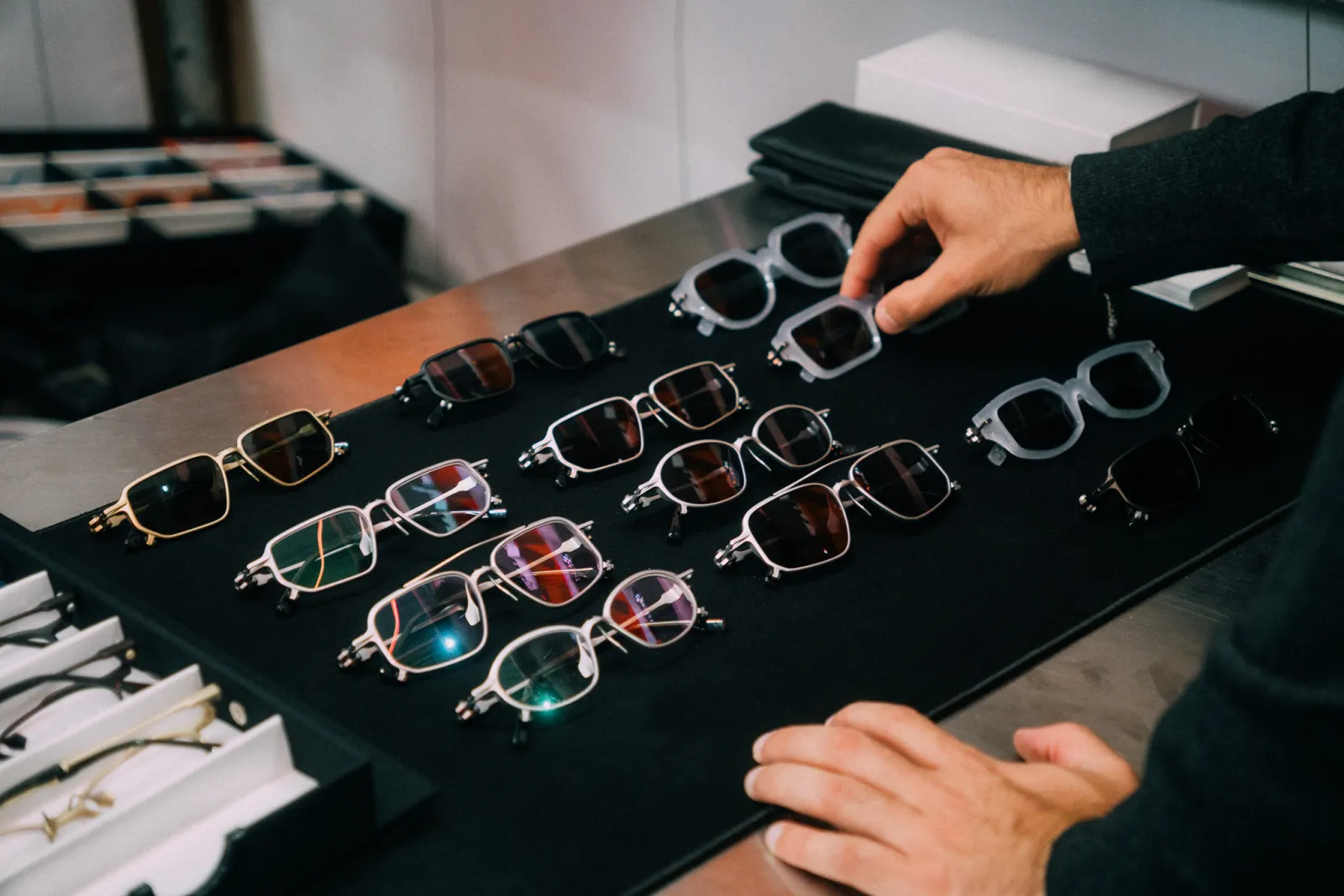
A curated selection is where that identity becomes visible. Differentiating does not require many brands, but for each one to play a role: frames that rotate, others that are prescribed over time and a few signature pieces that give the window authority. A few brands worked in depth tell a story better than many brands present with a couple of models. At FLAMA we design our collections with that logic of a ladder: the MRS system for customers who value engineering, and the titanium collection as the most precise version of that system.
The relationship with independent brands is the third piece. An independent brand should not be just another supplier, but a partner with a story the optical store can tell, collections with continuity and after-sales service that responds. When choosing one, it is worth asking who designs, where and why, what happens when a frame breaks and whether that brand is already in the store next door. In “How independent optical stores differentiate today” we set out the criteria many optical stores use to make that selection.
After-sales care is today one of the areas where the difference shows most. An optical store that can repair a frame instead of replacing it gives the customer a reason to come back. That is the idea behind FLAMA's MRS®, the Modular Repair System: a modular hinge with screwed components, designed so that parts can be changed in the workshop instead of throwing the glasses away. FLAMA's titanium collection shares its axis and spare parts with the MRS, and both are covered by the Artefact® Service, which includes component repair, adjustments and the replacement of worn parts.
None of this works unless it is explained at the counter. Customers who walk into a differentiated optical store expect to be told why a frame is worth what it costs: the material, the hinge, who designed it. A team that knows the product sells judgement, not discounts. In FLAMA frames with the MRS system the mechanics are visible, and that helps: the hinge can be shown, touched and understood at the counter, without opening a catalogue.
The physical space also communicates. Grouping the frames of a single independent brand, with their own story, lets customers perceive a collection rather than a mixed display. A window with fewer pieces, better chosen and well lit, conveys more confidence than a crowded one. The consistency between what the optical store says about itself and what it shows in its displays is what customers remember when they leave.
Differentiation also works outside the store. More and more customers look for a specific brand before they look for an optical store, and they end up in the shop that carries it. FLAMA publishes on its website a map of the optical stores that work with the brand, so that anyone who discovers FLAMA can find a nearby store where they can see and try it. For the optical store, being part of that network means receiving customers who already arrive interested in its selection.
Building a differentiated optical store is not a campaign or a seasonal change: it is the sum of consistent decisions about identity, selection, brands and service. None of them, on its own, makes an optical store unique; together, they make customers know why they walk into that shop and not another. For FLAMA, an independent design house from Valencia, the optical stores that work this way are its best allies, because they share the same idea: glasses designed to last, explained by people who know how to choose them.